Advanced Implant & Tissue Courses
Specialized training for complex hard–soft tissue cases
Advanced implant & tissue courses at Pikos Institute are designed for clinicians seeking structured, evidence-based education in surgical implant dentistry with a strong emphasis on guided bone regeneration (GBR), soft tissue management, and predictable clinical outcomes. These programs focus on the advanced biological and surgical principles required to manage complex implant cases where tissue quality, anatomy, and long-term stability are critical to success.
Unlike introductory implant education, these courses are intended for clinicians who already place implants and want to refine decision-making, improve consistency, and expand their ability to manage challenging hard and soft tissue conditions. Instruction integrates diagnosis, surgical planning, tissue regeneration strategies, and implant placement within comprehensive treatment workflows that reflect real clinical practice.
Through these advanced courses you will learn techniques and practical guidance around hard–soft tissue coordination and GBR decision-making, so clinicians can approach complex reconstruction with clearer frameworks and fewer surprises.
Our courses
Expert-led education focused on implant surgery and tissue management
Successful implant dentistry depends on more than implant placement alone. Long-term outcomes are influenced by bone quality, soft tissue stability, surgical sequencing, and how regenerative decisions interact with restorative goals. These advanced programs emphasize implant surgical principles within the context of tissue regeneration and anatomical management.
Participants gain exposure to complex bone concepts, ridge augmentation strategies, and tissue grafting techniques used to support implant stability and long-term function. Education focuses on understanding when regenerative procedures are indicated, how to select appropriate approaches, and how surgical decisions affect maintenance and complication risk over time.


Live surgical instruction grounded in clinical reality
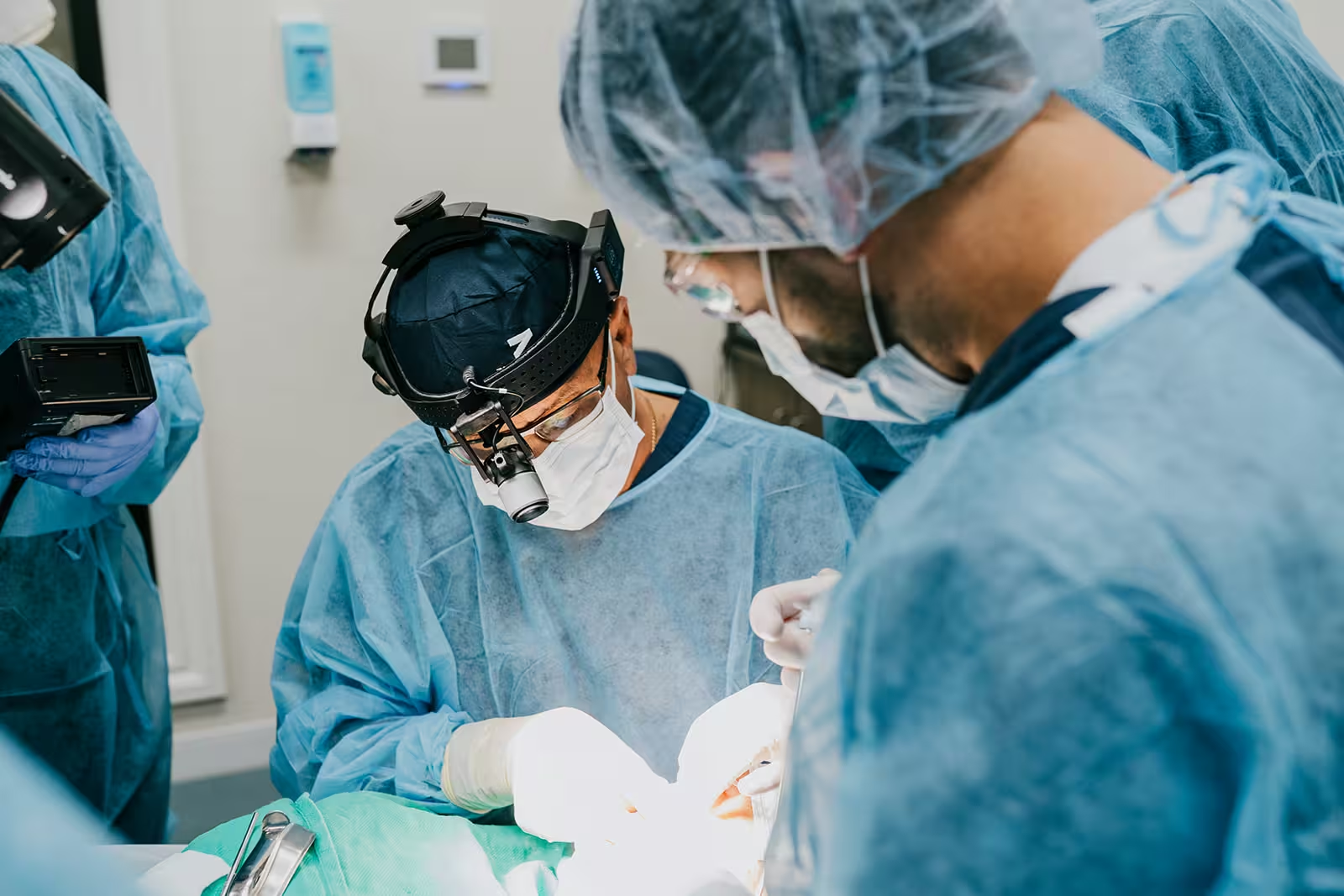
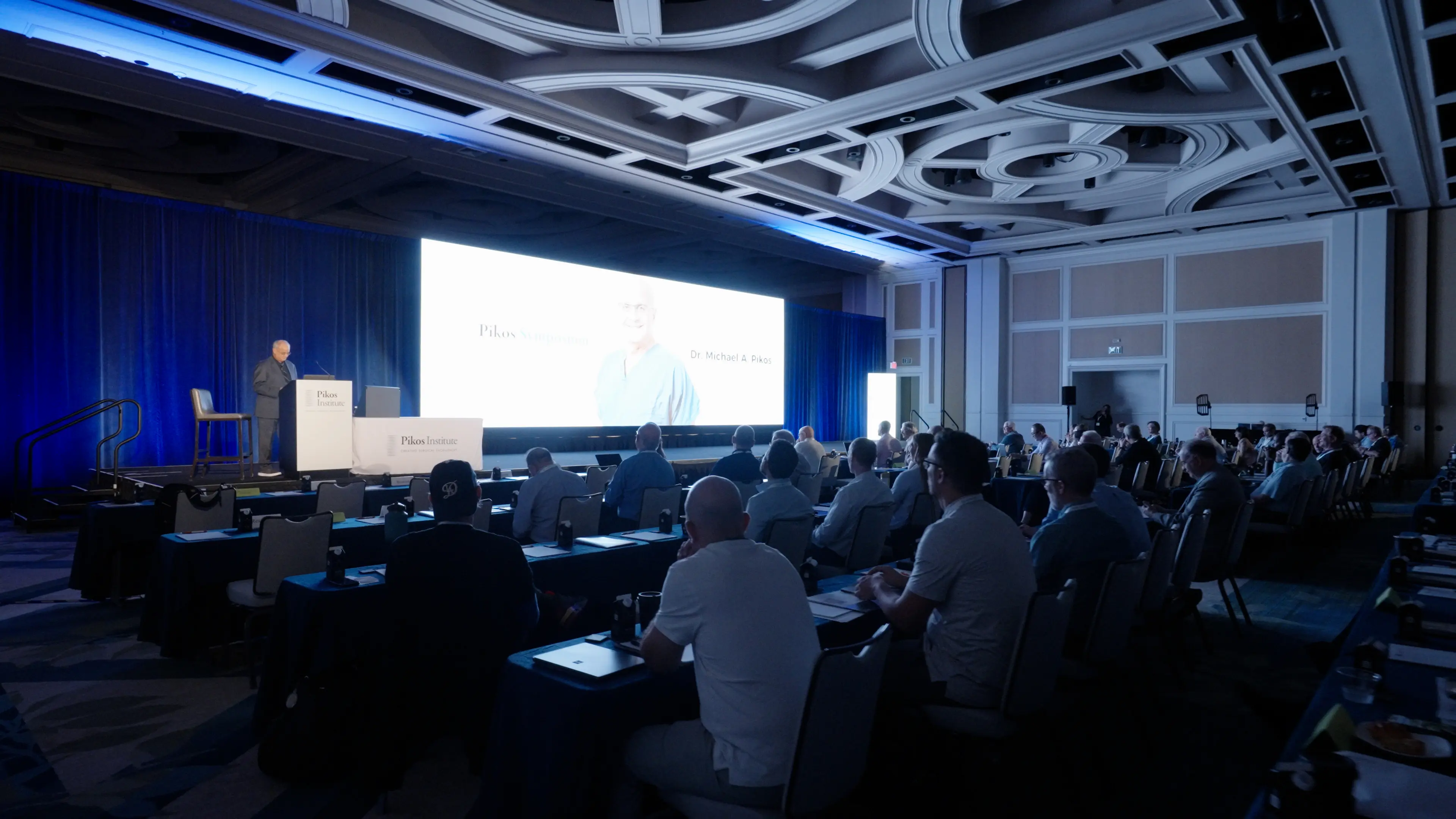
Implant education at Pikos Institute is delivered through live instruction, case-based discussion, and surgical observation. Courses emphasize how experienced clinicians evaluate anatomy, manage intraoperative challenges, and adapt treatment plans when ideal conditions are not present.
Live surgery sessions provide insight into real-time decision-making, including tissue handling, flap design, graft stabilization, and implant placement strategies. Rather than presenting idealized scenarios, instruction highlights variability and teaches clinicians how to respond thoughtfully when conditions change during surgery.
Comprehensive coverage of advanced bone & tissue regeneration principles
Bone regeneration is a central focus of our implant & tissue education. Courses explore how bone volume, density, and morphology influence implant placement and long-term success. Instruction addresses augmentation concepts at both the site-specific and arch level.
Participants examine principles of ridge augmentation, guided bone regeneration, and staged versus simultaneous approaches. Emphasis is placed on case selection, biological limitations, and risk management rather than protocol memorization. Understanding when bone regeneration improves outcomes, and when alternative strategies may be more appropriate is a core educational objective.
Advanced soft tissue management for implant stability
Soft tissue plays a critical role in implant health, aesthetics, and maintenance. These courses address soft tissue considerations that affect emergence profiles, hygiene access, and long-term peri-implant stability.
Instruction covers tissue grafting concepts, flap design, and management of soft tissue contours around implants. Clinicians learn how surgical decisions influence tissue thickness, keratinized tissue presence, and long-term biological behavior. By integrating soft tissue management into surgical planning, participants gain a more complete understanding of how implants function within the oral environment.
Who these courses are designed for
These programs are well suited for clinicians involved in surgical implant dentistry who want to deepen their understanding of tissue regeneration and surgical management.
Participants commonly include:
- Implant dentists seeking advanced regenerative education
- Oral and maxillofacial surgeons refining bone and soft tissue workflows
- Periodontists focused on surgical tissue management
- Clinicians managing complex implant reconstructions
- Providers seeking greater predictability in advanced cases
The curriculum supports clinicians who want to elevate outcomes while maintaining responsible, evidence-based practice.
Got questions?We’ve got answers

These courses are continuing education programs focused on the surgical, biological, and planning principles that support long-term implant success in complex clinical situations. Rather than addressing implant placement as a single step, these programs emphasize how guided bone regeneration (GBR), soft tissue management, and implant positioning must work together as part of a coordinated treatment strategy.
This education explores how decisions made during diagnosis, imaging interpretation, and surgical planning influence healing, stability, and maintenance years after treatment. Clinicians are guided to think beyond immediate placement success and consider how tissue behavior, prosthetic demands, and patient-specific risk factors interact over time.
By addressing implant therapy as a biologically driven process rather than a purely mechanical procedure, these courses help clinicians develop more predictable, repeatable approaches for patients with compromised anatomy, tissue deficiencies, or higher biological risk.
Yes. These programs are particularly valuable for clinicians who already place implants and want to refine clinical judgment, improve consistency, and manage more complex scenarios with greater confidence. This structured education allows experienced providers to revisit foundational principles through a more sophisticated lens, often identifying opportunities to reduce complications or improve efficiency.
For many clinicians, exposure to complex case discussions and planning concepts helps clarify patterns that lead to predictable outcomes versus those that increase risk. This insight is especially useful for practitioners encountering more challenging anatomical situations or higher patient expectations.
These courses also provide an important perspective for clinicians considering expansion into complex regenerative procedures. By observing how experienced faculty evaluate risk and manage limitations, participants can progress responsibly without unnecessary escalation in case complexity.
Bone and soft tissue regeneration play a central role in implant stability, esthetics, and long-term maintenance. Adequate tissue volume and quality influence implant positioning, prosthetic design, hygiene access, and the biological response around implants over time.
Continuing education helps clinicians understand how regenerative decisions affect outcomes well beyond initial healing. Topics often include how tissue thickness influences peri-implant health, how grafting impacts long-term bone stability, and how surgical techniques affect soft tissue maturation and maintenance requirements.
By developing a deeper understanding of tissue behavior, clinicians are better able to anticipate challenges, plan more predictably, and avoid complications related to inadequate regeneration or improper tissue management.
Yes. These programs are structured as accredited continuing education offerings and provide CE credit for participating clinicians. They are designed to meet professional requirements while delivering instruction that directly supports clinical growth.
Beyond credit hours, the education prioritizes concepts that improve planning consistency, surgical judgment, and long-term outcomes. This ensures that continuing education time contributes meaningfully to professional development rather than serving as a procedural obligation alone.
Clinicians often find that this type of education offers lasting value, as the principles learned can be applied across a wide range of cases and practice environments.
Advanced education supports long-term success by strengthening diagnostic planning, surgical execution, and tissue management strategies. Participants develop clearer frameworks for evaluating risk, sequencing treatment, and coordinating surgical and restorative decisions.
Over time, these structured approaches help reduce complications, improve consistency, and enhance communication with patients regarding expectations and maintenance. Better planning also supports more predictable follow-up care and earlier identification of potential issues.
As experience grows, these benefits compound, allowing clinicians to manage complexity more effectively while maintaining high clinical standards and patient trust.
We cover a broad range of surgical and biological topics related to implant placement and tissue management. Common areas of focus include anatomical assessment, surgical planning, ridge preservation and augmentation concepts, soft tissue handling strategies, and implant positioning within restorative-driven workflows.
Courses also explore how different regenerative approaches influence healing patterns, tissue stability, and long-term maintenance requirements. Attention is given to complication prevention, recognition, and management, as well as understanding the biological behavior of implants and surrounding tissues over time.
Rather than relying on protocol memorization, instruction emphasizes clinical reasoning—helping participants understand why certain approaches are chosen and when alternative strategies may be more appropriate. This adaptability is critical when managing patients with anatomical limitations or complex treatment needs.
Course formats vary depending on the specific program. Some offerings may include surgical observation or detailed surgical walkthroughs, while others focus on case-based discussion, protocol development, and structured analysis of surgical workflows. Details about learning format are always outlined on individual course pages.
Even when live surgery is not part of the program, participants still gain substantial surgical insight through step-by-step case reviews, imaging analysis, and discussion of intraoperative decision-making. Faculty often explain how they adapt techniques based on anatomy, tissue response, and unexpected findings.
This approach helps clinicians develop practical judgment rather than technique dependence. By understanding how experienced surgeons think through surgical challenges, participants are better equipped to apply concepts thoughtfully in their own practices, regardless of whether procedures are observed live.
No. Bone regeneration is not necessary in every implant case, and these courses emphasize careful case selection rather than routine grafting. Clinicians learn how to evaluate anatomical conditions, prosthetic requirements, and patient-specific factors before determining whether regenerative procedures add meaningful benefit.
Courses focus on identifying when regeneration improves predictability and when alternative strategies may offer similar outcomes with less complexity or risk. This includes understanding limitations related to defect size, bone quality, patient health, and long-term maintenance considerations.
This balanced perspective helps clinicians avoid overtreatment while still addressing cases where regeneration is critical to long-term success. Thoughtful decision-making supports better outcomes and aligns treatment plans with patient-specific needs.
These courses focus on improving clinical judgment around when grafting adds meaningful predictability, and when it may introduce unnecessary risk, cost, or complexity. Rather than treating augmentation as a default step, participants learn to evaluate defect type, tissue quality, prosthetic demands, and patient-specific factors to determine the most appropriate approach for the case.
Education emphasizes practical decision points clinicians face every week: choosing between staged vs. simultaneous approaches, understanding how site anatomy influences regenerative predictability, and planning for long-term maintenance, not just short-term healing. The goal is to help clinicians select strategies that align with the clinical objective while maintaining consistency and reducing avoidable complications.
Pikos Institute provides education grounded in real clinical experience and evidence-based principles rather than trend-driven techniques. Instruction emphasizes clarity, repeatable systems, and thoughtful decision-making that can be applied across diverse clinical scenarios.
Courses reflect the realities of implant dentistry, including anatomical variability, biological limitations, and long-term maintenance considerations. Faculty focus on helping clinicians understand how to adapt approaches responsibly rather than relying on rigid protocols.
This educational philosophy supports sustainable clinical growth, allowing clinicians to refine skills, improve predictability, and deliver patient-centered care over the long term.
