Dental Symposiums & Pikos Education Events
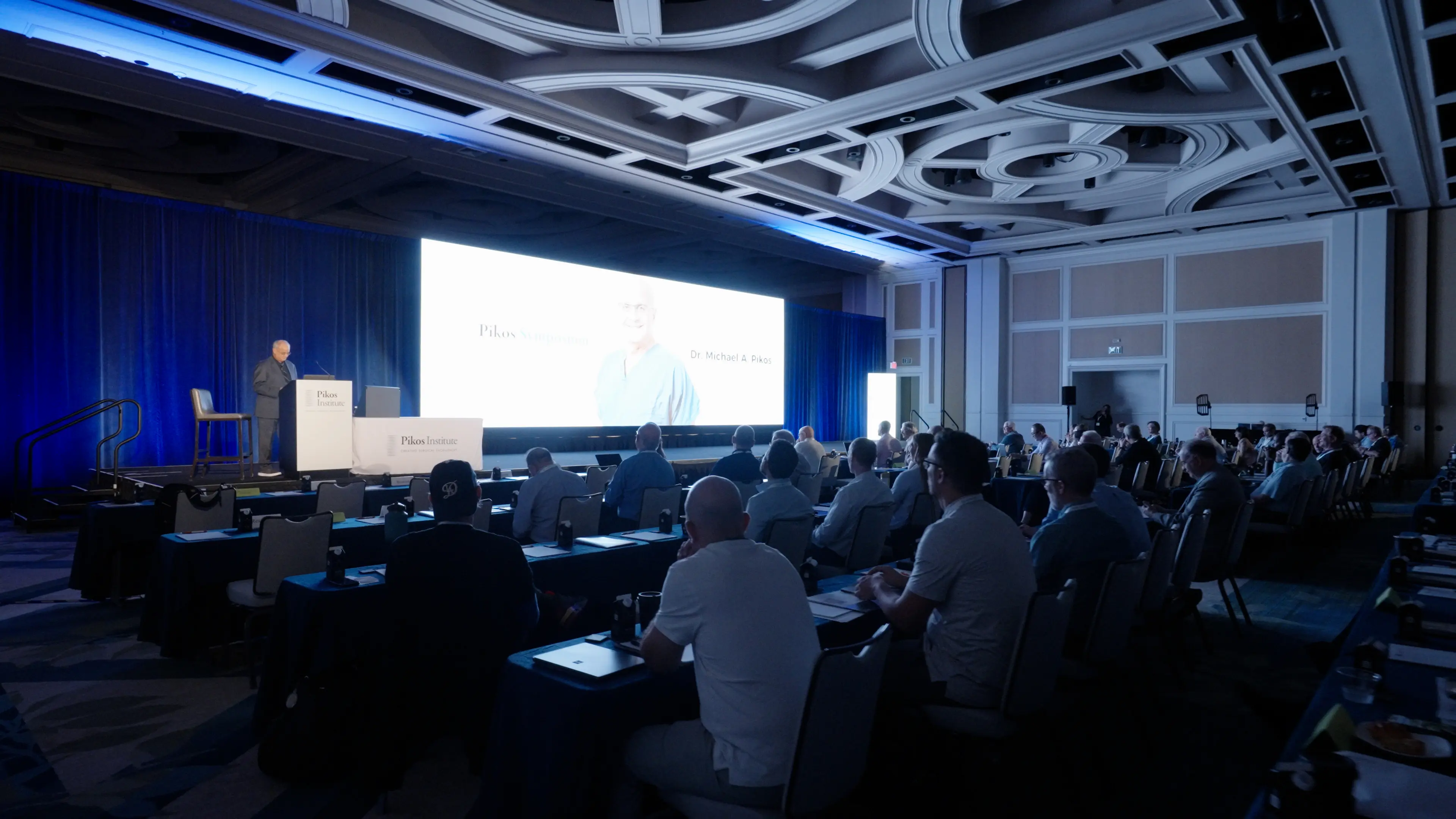
Pikos Institute hosts a series of advanced live dental education events, including symposiums and focused summits, designed for clinicians seeking deeper clinical insight beyond traditional course formats. These programs emphasize real-world case analysis, expert discussion, and evidence-based perspectives on modern implant and surgical dentistry.
Rather than teaching a single technique or workflow, these events provide an opportunity to explore complex clinical challenges from multiple viewpoints. Through structured presentations and case-based discussion, participants gain a clearer understanding of how surgical planning, implant selection, and restorative decision-making intersect in advanced care.
By offering immersive, discussion-driven education, Pikos Institute supports clinicians who want to refine judgment, evaluate evolving treatment concepts, and improve predictability across complex implant cases.
Upcoming Symposiums
Live education events focused on advanced implant concepts
The live events hosted by Pikos Institute are organized around focused clinical themes, often addressing advanced implant reconstruction and challenging anatomical scenarios. Educational content frequently explores full-arch treatment strategies, complication management, and decision-making in cases where conventional approaches may be limited.
Sessions may include analysis of complex implant planning, evaluation of surgical alternatives, and discussion of long-term outcomes. Rather than promoting a single solution, faculty examine multiple treatment concepts, helping clinicians understand how to adapt approaches based on patient-specific factors.
This format encourages critical thinking and supports more informed clinical decisions, particularly in cases involving compromised anatomy or advanced reconstruction needs.


Educational format designed for clinical relevance
Each live education event is structured to balance expert lectures with applied clinical insight. Content is grounded in real clinical experience and supported by scientific evidence, allowing attendees to connect theory with everyday practice.
Topics commonly explored during these programs include:
- Management of complex implant cases and complications
- Evaluation of digital planning and guided surgery workflows
- Treatment strategies for challenging maxillary anatomy
- Surgical alternatives for severe bone limitations
- Comparative discussion of advanced implant concepts
- Long-term considerations for stability and maintenance
By focusing on clinical reasoning rather than step-by-step instruction, these events help clinicians strengthen judgment and adaptability across a wide range of treatment scenarios
Who these live education events are designed for
These programs are intended for clinicians seeking advanced continuing education through discussion-based learning and real case analysis. They are particularly valuable for dental professionals involved in implant dentistry who want exposure to broader perspectives and deeper clinical evaluation.
Live education events hosted by Pikos Institute are well suited for:
- Dentists managing complex implant and full-arch cases
- Oral surgeons refining advanced surgical planning
- Clinicians evaluating evolving implant solutions
- Providers treating anatomically challenging patients
- Implant teams aligning surgical and restorative decisions
Because the content emphasizes decision-making rather than technique alone, these programs support both experienced clinicians and those expanding into more advanced treatment planning.
How live symposium-style education differs from traditional CE courses
Traditional CE courses often focus on defined techniques or procedural workflows. In contrast, symposium-style education emphasizes discussion, comparison, and evaluation of multiple clinical approaches.
Participants are exposed to real cases, complication scenarios, and alternative solutions, helping them understand how different strategies perform across varied patient presentations. This approach supports adaptability and critical thinking rather than reliance on a single protocol.
By combining expert insight with applied case discussion, these events bridge the gap between research, clinical experience, and daily patient care.
Got questions?We’ve got answers

A dental symposium is a multi-day continuing education event that focuses on in-depth discussion of clinical topics rather than procedural instruction alone. These programs emphasize expert insight, real case analysis, and evaluation of advanced treatment concepts, often across a range of clinical philosophies.
At Pikos Institute, symposiums are part of a broader live education offering designed to support advanced clinical decision-making. The format gives clinicians space to learn from experienced faculty, compare approaches, and leave with clearer frameworks for applying concepts responsibly in practice.
Topics vary by program but often include advanced implant planning, full-arch reconstruction concepts, complication management, and long-term treatment considerations. Sessions may also explore digital workflows, anatomical challenges, and evolving surgical solutions, especially where conventional approaches are limited.
The emphasis remains on practical insight supported by real clinical experience. Content is often framed around “why” and “when”, helping clinicians connect technique selection to patient factors, anatomy, and long-term predictability.
Yes. Case review and clinical discussion are central to the educational format. Faculty present real scenarios, discuss outcomes, and examine complications alongside alternative solutions, including what they would do differently and why.
This allows attendees to learn from realistic situations rather than idealized examples. Case-based learning also helps clinicians understand the decision logic behind treatment choices, which often translates more directly into improved planning and patient communication.
Yes. Live education events hosted by Pikos Institute are structured as accredited continuing education programs and provide CE credit. The focus remains on delivering education that is both compliant and clinically meaningful.
Beyond credit hours, the value comes from applied discussion, helping clinicians improve how they plan, evaluate risk, and approach complicated cases, rather than collecting CE through purely passive content.
Event locations vary and may include conference venues or dedicated education centers. Specific dates, locations, and credit hours are listed on individual event pages.
Because formats and venues can differ by program, the course listings are the best source for travel planning, scheduling, and logistics. Attendees can reference those pages to confirm location details and timing.
Hands-on courses typically focus on practicing specific techniques and building execution skills through guided repetition. Symposium-style events prioritize clinical reasoning, discussion, and comparison of different treatment approaches across real patient scenarios.
This format allows clinicians to evaluate outcomes, recognize limitations, and understand how to adapt strategies across complex cases. It’s especially helpful for decision points that are difficult to teach by steps such as case selection, risk assessment, and sequencing.
Yes. These live education programs are particularly valuable for clinicians already practicing implant dentistry who want to refine judgment, explore advanced concepts, and evaluate alternative treatment strategies. They often help experienced providers stress-test current workflows and identify small changes that improve predictability.
They also provide observational value for clinicians preparing to expand into more complex care, offering exposure to advanced case discussion before taking on more challenging scenarios in their own practice.
Exposure to multiple clinical perspectives helps clinicians strengthen critical thinking. Participants learn to assess patient factors, anatomical limitations, and procedural risks more effectively, especially in cases where the “best” option depends on tradeoffs.
Over time, this leads to more confident planning and improved predictability in complex cases. Clinicians often leave with clearer criteria for case selection, sequencing, and managing expectations both clinically and in patient conversations.
Discussion-based events complement technique-focused courses by expanding clinical context. While courses teach defined workflows, symposium-style education explores when and why different solutions should be applied, and what to watch for when cases become complex.
Together, they support a more complete educational pathway. Many clinicians use symposium learning to refine judgment and planning, then reinforce skills and execution through hands-on or workflow-driven training.
Clinicians attend these programs to gain deeper insight into advanced implant dentistry, evaluate evolving treatment concepts, and learn from faculty actively engaged in clinical practice. The discussion-driven format helps clinicians compare approaches and clarify decision pathways.
The emphasis on real cases, evidence-based discussion, and clinical judgment supports long-term professional growth. Many attendees value the opportunity to learn from complications and outcomes, not just ideal cases, and apply those lessons to improve predictability and confidence.
